Engineering
Spec-driven engineering
A structured loop across Linear, Slack, Git, and your development environment. dev5 executes the parts that are ready, and brings people in for judgement, approval, and review.
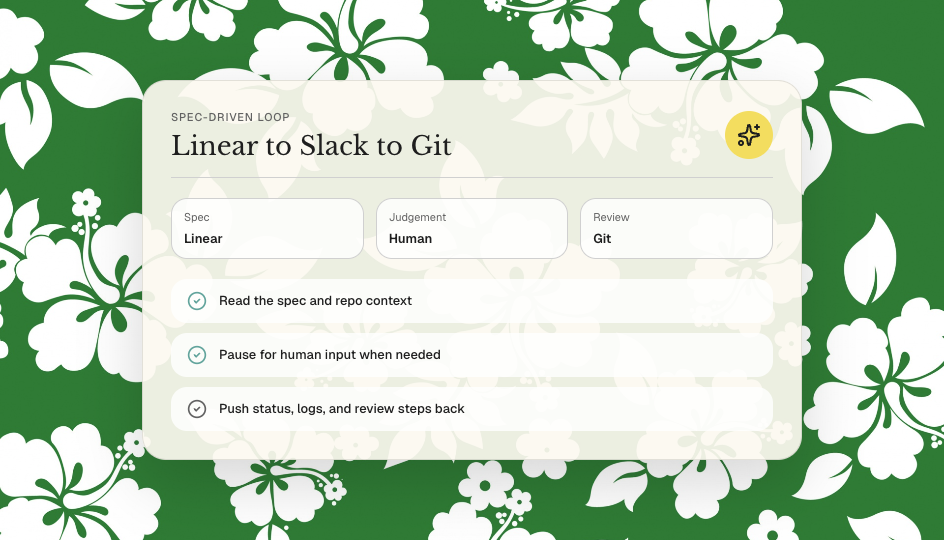
For teams with more good engineering work than focused engineer time
Most engineering organisations already know where delivery slows down: unclear specs, handoffs, waiting for decisions, and review loops that drift away from the original issue. dev5 keeps that loop structured inside the systems where planning, implementation, and review already happen.
Senior engineers stay in the loop for architecture, product calls, and review. Maintenance, research, refactors, and tightly scoped implementation move forward without removing the human checkpoints that make engineering good.
We first built dev5 for ourselves: four developers using OAIZ to give the fifth seat to structured engineering loops. Now we set up custom versions for teams that want more engineering work to move.
How the loop runs
 Spec the work
 Research codebaseAnswer questionsCreate implementation plan
 PR created with planAccept planImplement planReview implementation code
The useful distinction is which parts need senior judgement, which parts need approval, and which parts are defined enough to move with inspection points.
Spec the work. Turn product intent into a clear Linear issue with acceptance criteria, scope, and owner.
Ask where judgement is needed. dev5 routes decisions, ambiguity, and approval points back to humans in Slack or Linear.
Execute and review. It works in an isolated environment, updates the issue, and moves toward a Git branch your team can review.
Every task has status, logs, environment boundaries, and a path back to the issue. Engineering leaders can see what ran, what changed, and who approved the important steps.
Built on OAIZ
OAIZ gives dev5 the workflow layer: events, native integrations, business context, execution logs, and controls. The same foundation can route decisions through Slack, update Linear, and keep Git output tied back to the original spec.
Linear is the spec and status surface. Slack is where checkpoints land for human judgement. Git branches are the reviewable output. Each task runs in its own development environment, with logs and decisions kept traceable.
dev5 is one workflow built on OAIZ. Your version can be shaped around your stack, delivery process, and engineering standards. We work with teams to identify the right first loop, connect it to Linear, Slack, Git, and the development environment, then define exactly where humans approve, clarify, and review.
Related templates
Thread →
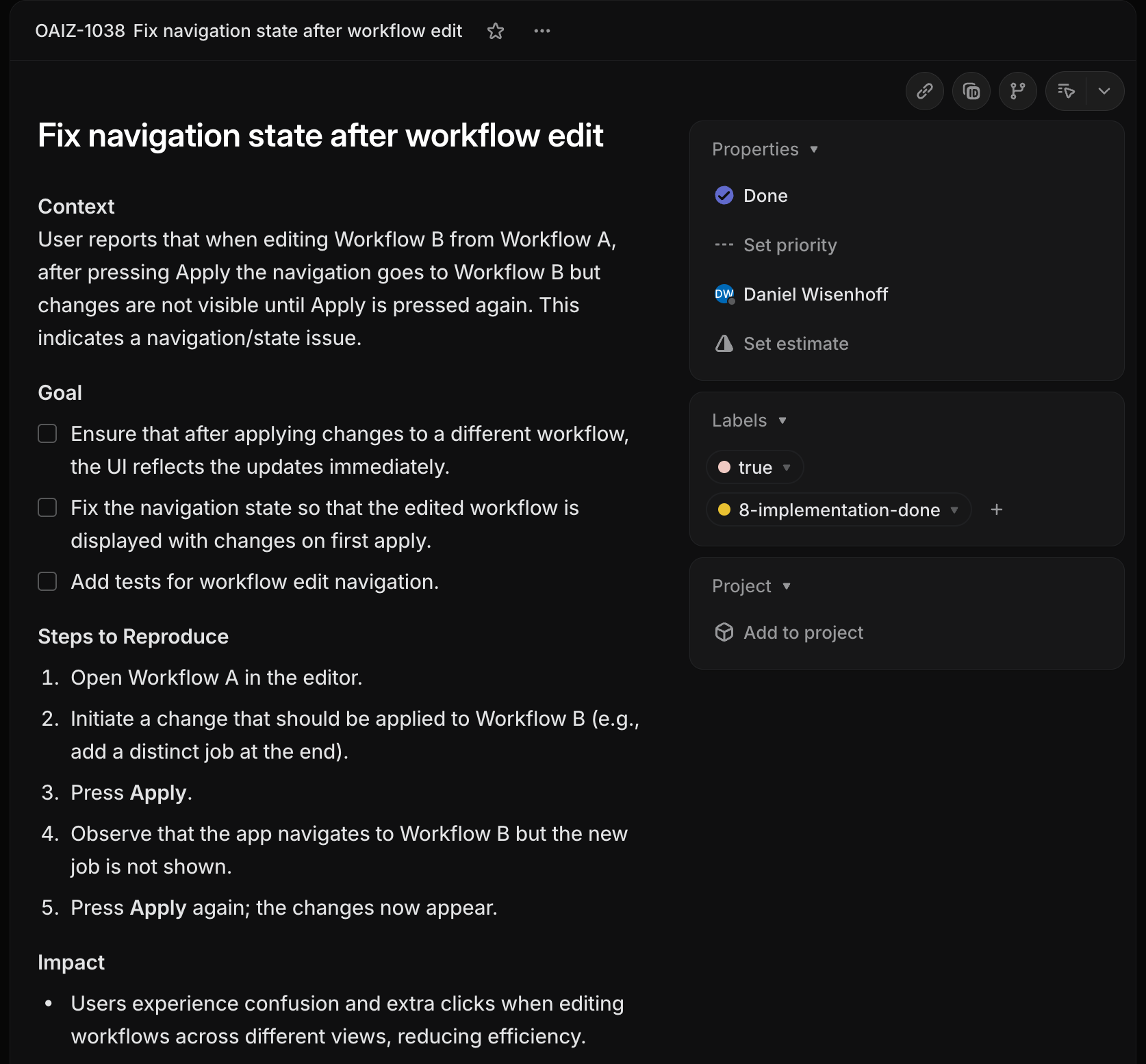
Linear issue

Slack Thread to Issue
React with an emoji to create a Linear Issue based on a slack thread, formatted according to your Issue best practices
Auto
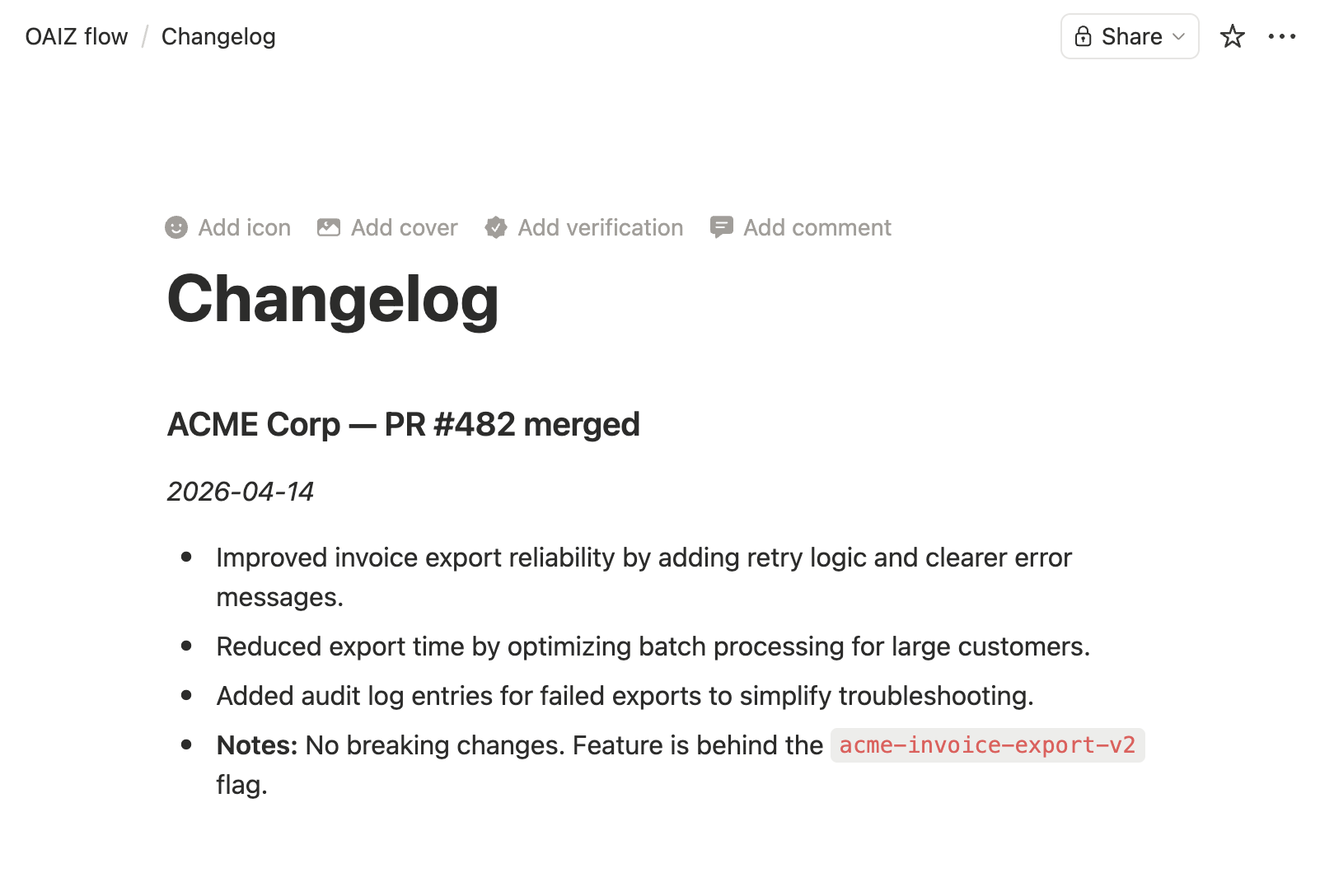
changelog entries

Changelog Writer
Automatically write change logs whenever a Pull Request is merged
Catch
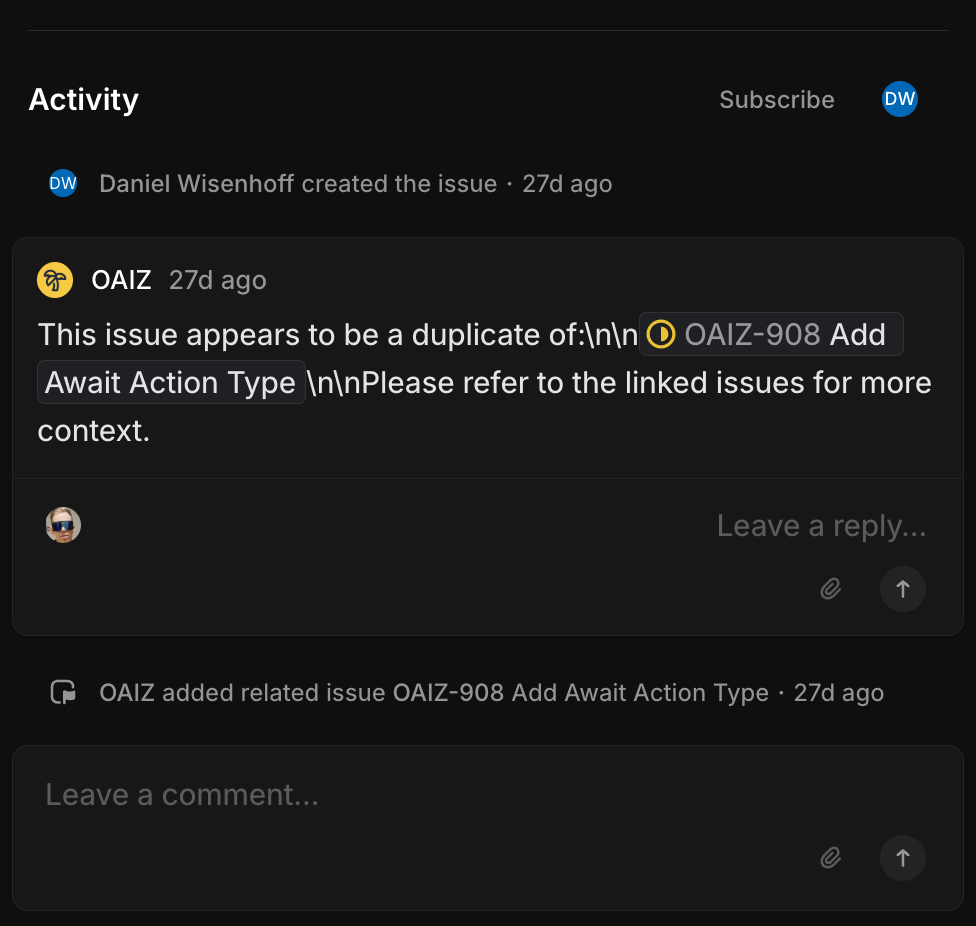
duplicate issues
Prevent Duplicate Issues
Checks if a newly created issue already exists. If it does, closes the issue with a comment and reference to the original